Historic Buildings
Our philosophy for historic buildings is that you must first understand the original construction. Until you have achieved that, you cannot design alterations or solve problems in a way which will be sympathetic to the original construction.
Our knowledge of historic construction techniques and materials together with our knowledge of sources enables us to understand existing buildings of all ages.
Andrew Dutton is a member of the Conservation Accreditation Register for Engineers. See http://www.careregister.org.uk/.

Cannington Court, Somerset
HPM have completed work on a £21m training campus, with accommodation, near Bridgwater for a major multi-national company.
At the centre of the scheme is the Grade I listed Cannington Court, a building with origins as a c.12th Benedictine Nunnery, but much altered and extended over the years to what one sees today.
This became a very complex conservation engineering project when significant structural defects were uncovered, having been masked by an unsympathetic 1930’s refurbishment.
HPM liaised directly with English Heritage engineers to agree minimum intervention yet practical solutions to keep the program on track.
Waterloo Station Offices
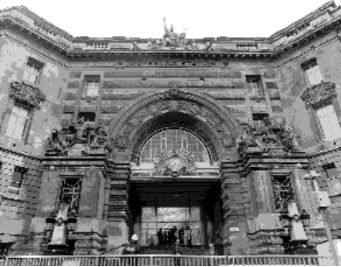
Waterloo Station Offices were constructed from 1910 to 1919 as purpose built offices but were no longer suitable for current day use.
We provided structural engineering support for a major refurbishment contract involving constructing six major cores for lifts, stairs and services as well as floor strengthening.
Many of the floors contained fragile Frazzi fireproof tiles which made it very difficult to fix services.
Palace of Westminster
Over the last eight years we have provided structural engineering advice on a number of refurbishment and new construction projects at the Palace of Westminster:
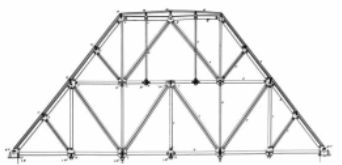
Refurbishment of the roof of the House of Lords; Strengthening of the ceiling of the Royal Chamber; Refurbishment of Royal Court facades and roof;
New basement for Peers Court.
We believe that we were first appointed for this work due to our understanding of the structural principles of the old buildings and our sympathetic solutions.
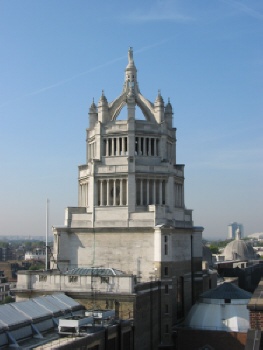
Victoria & Albert Museum Roofs
Hurst Peirce + Malcolm LLP were commissioned to carry out a detailed survey of all 57 different roof types to the Victoria & Albert Museum.
The purpose of the survey was to determine the condition of each roof and to prepare a long term strategy for the roofs.
The report took the form of an interactive document allowing sorting in accordance with age and life expectancy and hyperlinking to photographs.
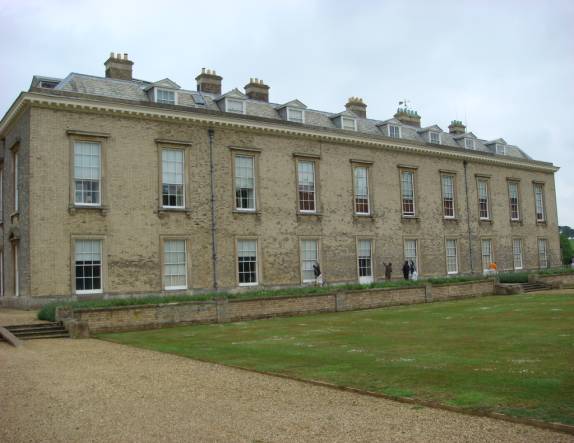
Althorp House, Northamptonshire
We developed special ties which fitted into the 3m joints between the bricks but were positioned so that they could be cut out to permit removal in the future.
The project was winner of the 2012 RICS Building Conservation and Project of the Year Awards.